The Thucydidean Patient
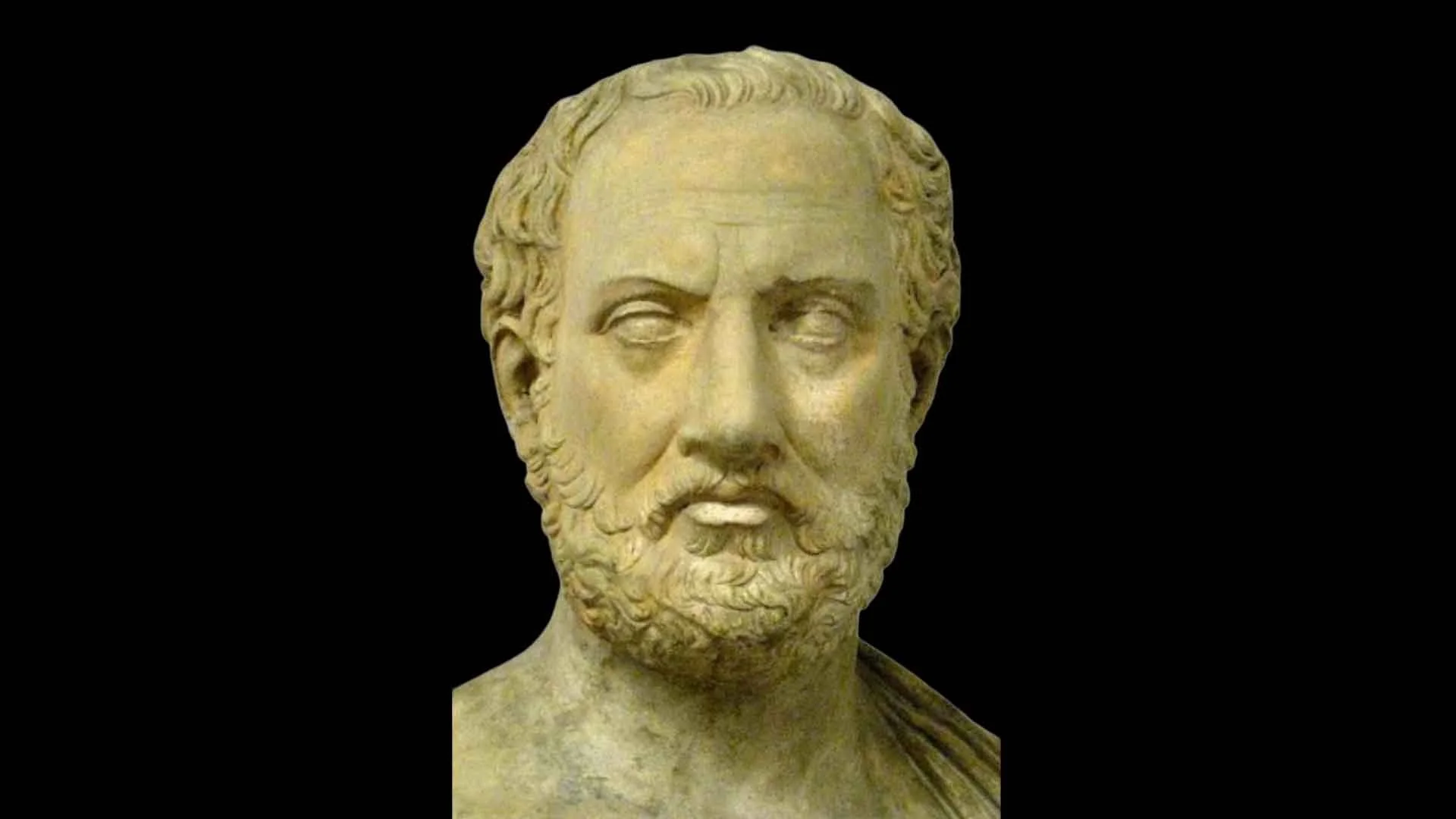
Plaster cast bust of Thucydides in the Pushkin Museum, created from a Roman copy of an early fourth-century BC Greek original located at Holkham Hall
The Thucydidean Patient
Graham Allison’s Destined for War popularized “Thucydides’ Trap” — the structural danger that arises when a rising power threatens to displace an established one, generating fear, miscalculation, and a drift toward war that neither side fully intends. [1] This essay transposes that model from international relations into the clinical encounter and argues that the metaphor is double-edged. On one hand, the trap usefully names a real clinical phenomenon: when a catastrophic diagnosis arrives, the patient experiences the illness as a rising power threatening the established empire of the self, and medicine readily supplies a militarized grammar — the “war on cancer,” the “battle,” the “fight” — that can become self-fulfilling. Fear itself becomes causal. On the other hand, the metaphor, like Allison’s thesis, risks an over-determination of reality: it assumes that the deepest grammar of existence is competition, displacement, dominance, and survival. [2,3] Drawing on post-Holocaust Jewish theology, Lurianic Kabbalah, and a hermeneutic philosophy of medicine, I argue that illness is not only an invasion to be repelled but also a rupture of meaning, a contraction of ordinary time, and a forced encounter with concealment (hester panim). I propose an alternative clinical-theological model — not war but covenant under rupture — in which the physician stands beside the patient not as a general directing a campaign but as witness, interpreter, and sacred advocate. The therapeutic task is to interrupt the fatal script before the patient comes to believe that overpowering is the only story available, and to open a third space in which the patient can say: this disease is powerful, but it is not sovereign over the whole of my being.