The Placenta as Sacred Interface
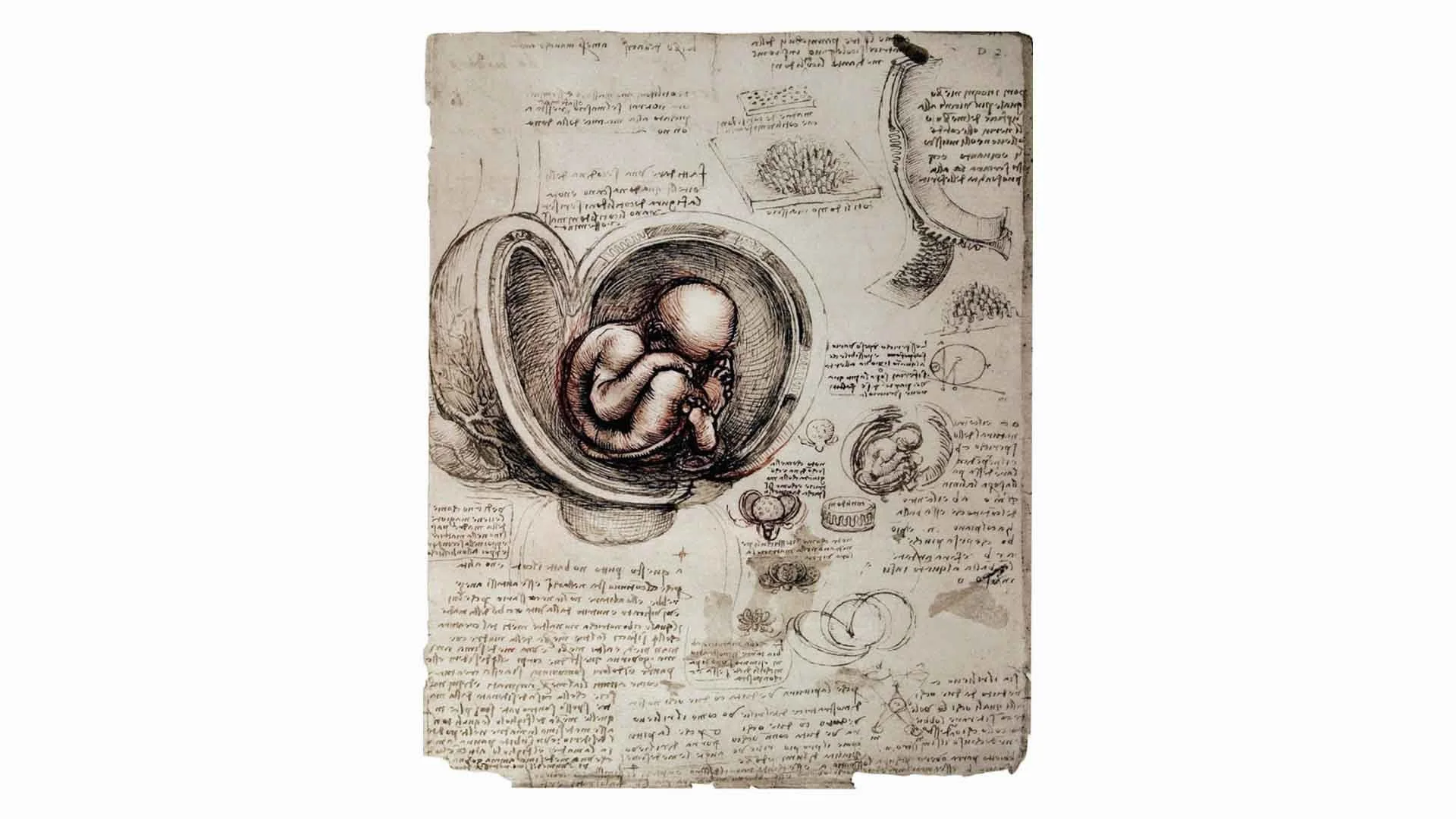
The human fetus as depicted by Leonardo da Vinci, circa 1510. Shown is the gravid uterus with its blood vessels, fetus in the breech position, fetal membranes, and umbilical cord with vessels. Although Leonardo depicted a single placental disc beneath the fetus, he mistakingly showed the placental attachment as being cotyledonary, interdigitating with maternal crypts as in a ruminant (upper right portion of drawing).
The Placenta as Sacred Interface
The placenta represents a profound convergence of biological, mythological, and theological significance that remains largely unexplored in contemporary medical practice. Recent advances in placental research (2023-2025) reveal this organ as a dynamic neuroendocrine, immunological, and metabolic interface that governs maternal-fetal communication and shapes lifelong health trajectories. Concurrently, cross-cultural anthropological evidence demonstrates that diverse ancient civilizations recognized the placenta as a living entity worthy of reverence, conceptualizing it variously as twin soul, guardian angel, and cosmic creative force. This discursive essay synthesizes cutting-edge placental science with ancient mythological wisdom and the embodied theological framework of tzimtzum (divine contraction) to propose a transformative model for clinical practice.