The Hunger Beyond Naming
The Hunger Beyond Naming
Compulsive eating is increasingly described in the language of addiction, yet the construct remains contested. Most people with obesity do not meet food-addiction criteria, and many who do are not obese. This paper proposes that three vocabularies rarely brought together describe the same clinical phenomenon from complementary sides: the neurobiology of reward, the practical theology of the Twelve Steps, and the classical tradition of apophatic, or negative, theology.
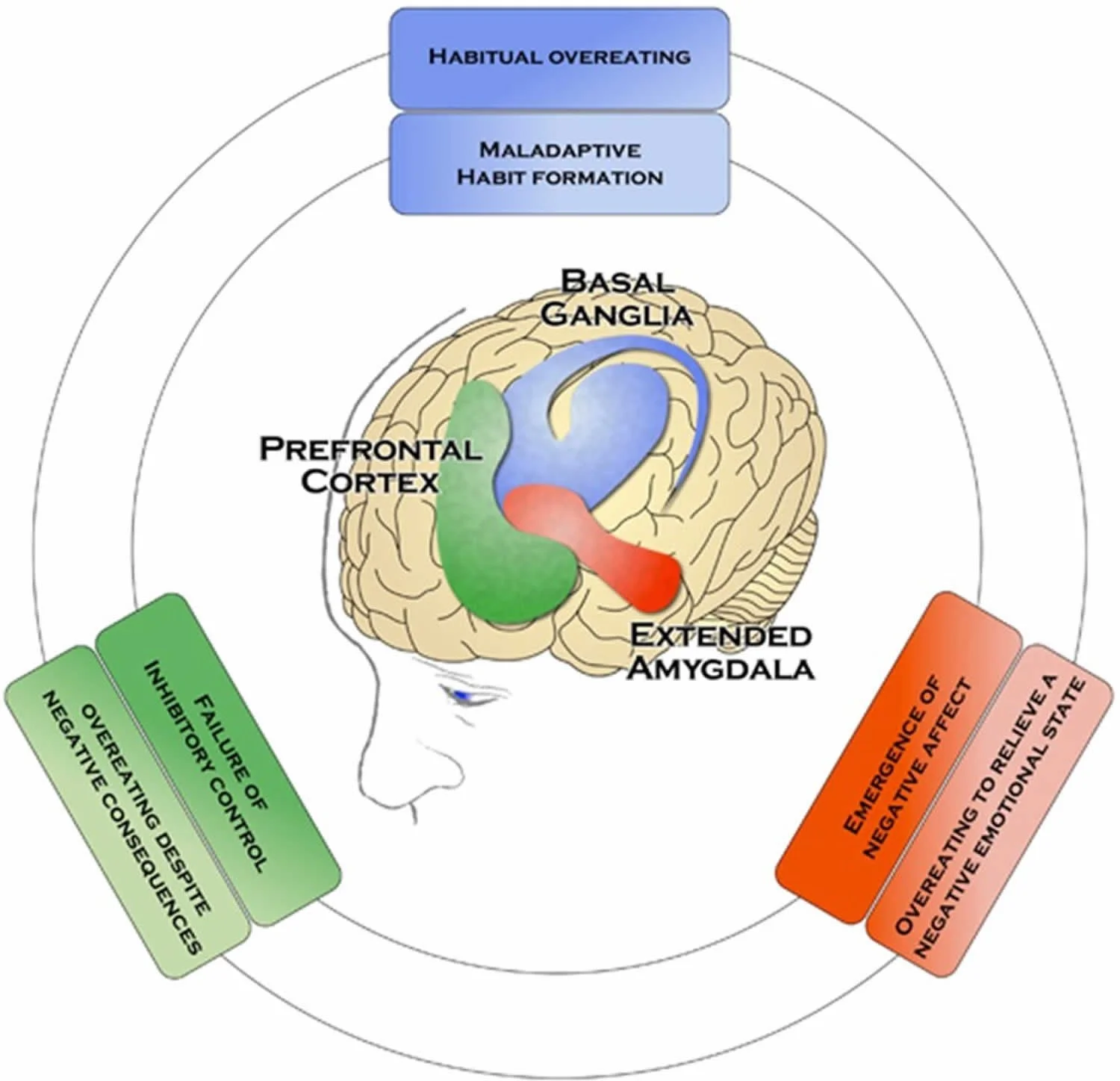
The neurobiological literature shows how the gap between desire and satisfaction is exploited. It documents the dissociation of incentive "wanting" from hedonic "liking," striatal dopaminergic adaptation, the recruitment of stress systems in negative reinforcement, interoceptive confusion, and the reward-maximizing design of ultra-processed foods. Glucagon-like peptide-1 (GLP-1) receptor agonists can now quiet craving, but clinical experience suggests that patients are often left facing an unfamiliar silence that pharmacology cannot interpret.
The paper argues that compulsive eating is best understood as a disorder of closure: a compulsion to close the gap between desire and satisfaction. Apophatic theology is, by contrast, a discipline of the gap kept open. Drawing on Pseudo-Dionysius, Maimonides, Gregory of Nyssa's doctrine of unending desire, Wolfson's critique of theomania, and the Lurianic concept of tzimtzum, the Twelve Steps are read as an applied apophatic practice. Step One functions as an unsaying of the self; the formula "God as we understood Him" is a deliberate refusal to fix the divine in a concept; and recovery transforms desire rather than abolishing it.
A mapping of the Steps onto theological, neurobiological, and clinical registers is offered as a set of testable hypotheses rather than established mechanisms. Clinical cautions are addressed, including the risk that rigid abstinence models pose to patients with eating disorders, weight stigma, and the uneven evidence base for Overeaters Anonymous. The paper closes with practical recommendations for the consulting room.